




quoi de neuf
Carine Roitfeld

Apartment

Closet

Library

CR FASHION BOOK

Issue 1
REBIRTH 

Issue 2
DANCE

Harper's Bazaar

carine roitfeld: irreverent

SHOW YOUR LOVE

IWTBAR iPhone 4 Case

IWTBAR Black Tee

IWTBAR White Mug

IWTBAR White Tee

Vegan Perfume at Pacifica

Joie

Rebecca Taylor

Diesel Mens Denim SS 160x600

Hurley

modaoperandi.com

mercredi
janv.162013

Elsa Peretti Scorpion Pendant

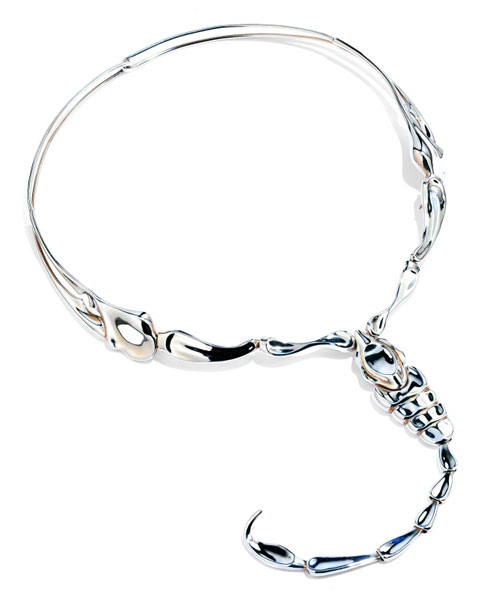
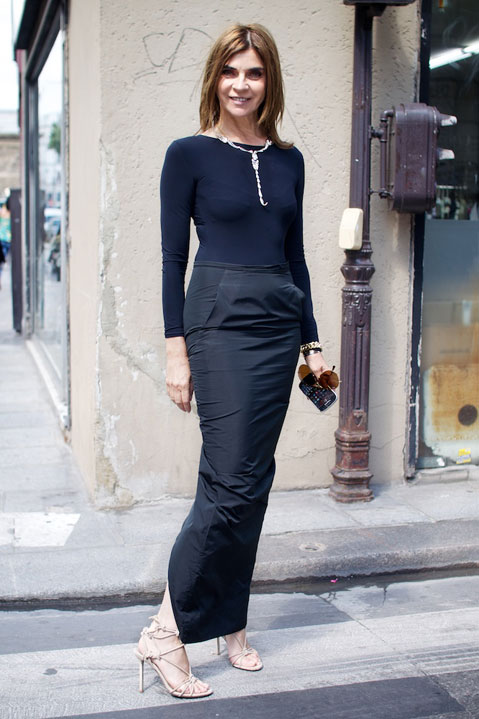
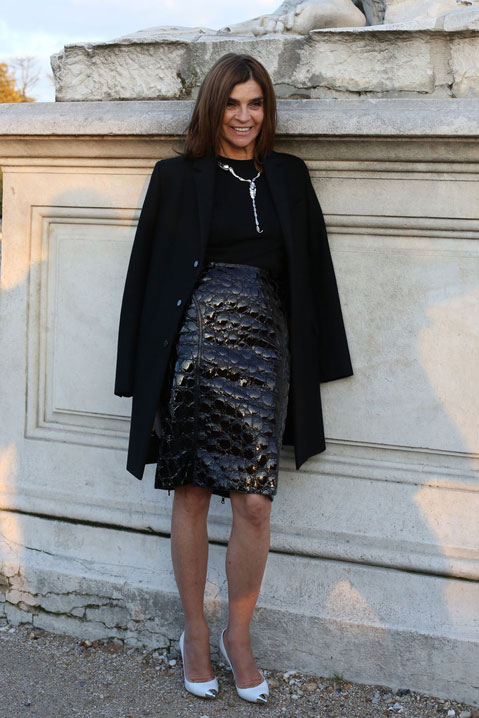
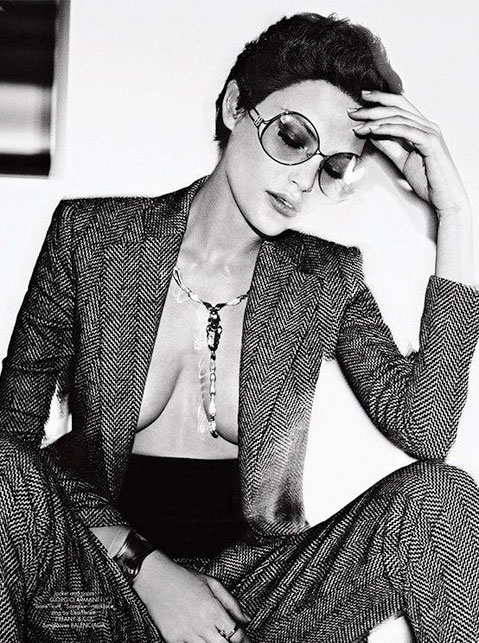
Carine Roitfeld is renowned for her style, classic with a twist, and her beloved Elsa Peretti scorpion necklace suits her aesthetic perfectly. The elegant metallic scorpion collar pendant is crafted of articulated segments with the menacing claws encircling the neck and the tail poised on the chest in a dangerous flick, so Carine… Designed by Elsa Peretti for Tiffany & Co. in 1979, the curious necklace resulted from her obsession with the scorpions living near her home in Catalonia. The artist shares her inspiration: "While working in Sant Martí Vell, I came across a lot of scorpions. The animals are incredibly attractive, with fascinating mechanics. Strangely they are never around when I need to review something in my design. I have to confess that I had to sacrifice a few. I feel sorry."

Carine acquired this treasured piece years ago and stored it in her bank vault for safekeeping until recently when she retrieved it so she could wear it again. One reason she loves the scorpion is because it reminds her of her partner, Christian Restoin, as Scorpio is his astrological sign; I adore her sweet sentimentality. Carine refers to herself as a collector of the designer's work and also among the treasures in her jewelry box is the Elsa Peretti bottle pendant.

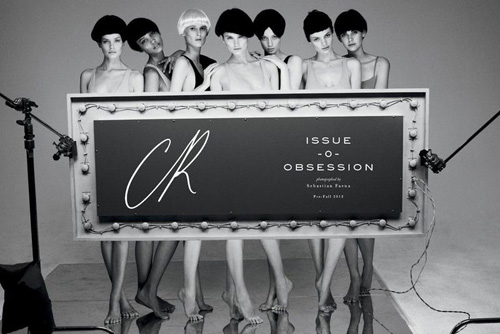
Carine met Elsa Peretti once and remembers her as an amazing woman with an amazing (albeit masculine) voice, she considers the jewelry designer a big talent and one of her big icons. Carine also thinks of Peretti as a muse for the first issue of CR Fashion Book, she styled the editorial "Elsa" in her likeness, casting Catherine McNeil as Peretti as shot by Kacper Kasprzyk in a New York apartment that formerly belonged to Halston. I wonder if McNeil is wearing Carine's own Elsa Peretti scorpion pendant for the editorial… Tiffany & Co. continues to produce the scorpion necklace but in a slightly different variation, it now hangs on a 15.5" inch chain and is cast in either gold or sterling silver. Be sure to view "Scorpion Queen" on CR Fashion Book in which Carine Roitfeld discusses Elsa Peretti and her scorpion pendant.

Elsa Peretti scorpion collar pendant photo courtesy of Tiffany & Co. Carine Roitfeld photos courtesy of Fashion Spot. "Elsa" editorial image by Kacper Kasprzyk for CR Fashion Book.

vendredi
janv.042013

Alvar Aalto Stool 60

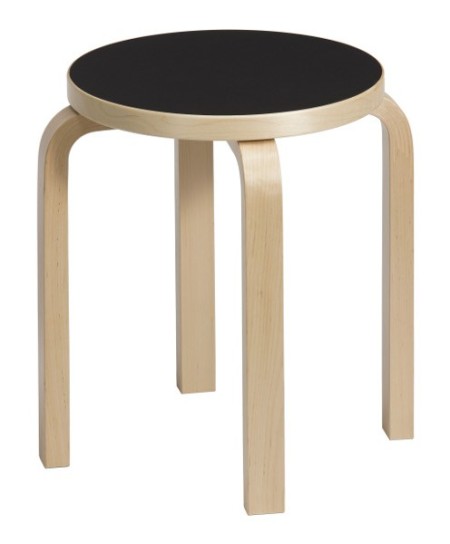
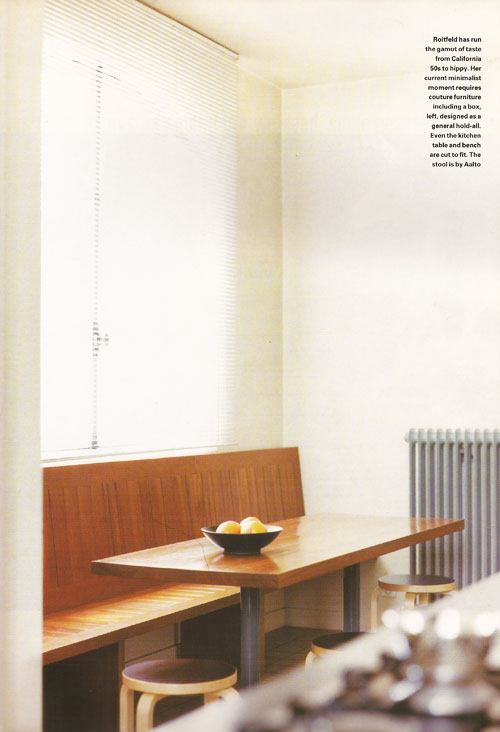
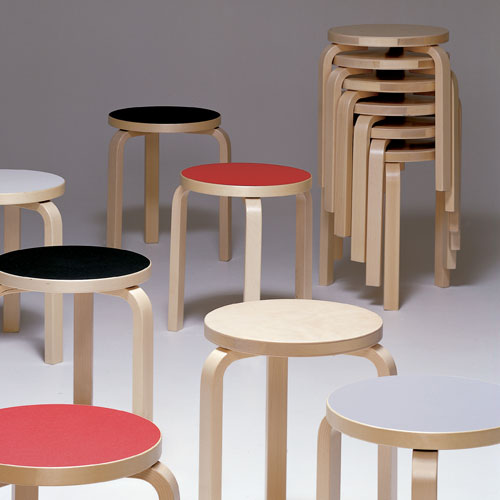
Carine Roitfeld has an eye for the classic in modern design and even the stools in her kitchen nook are a fine example of her aesthetic. The timeless and innovative stool that Carine prefers is the vision of Finnish architect and designer Alvar Aalto, one of the most influential artists in Scandinavian modernism. Designed in the early 1930s, the Stool 60 is an icon in modern furniture, a simple stackable piece constructed of solid natural birch and coated with a thin veneer to accent the beauty of the wood grain. Carine has selected a black laminate finish for the seats of her stools; other color choices are birch, red, and grey. The Alvar Aalto Stool 60 is also part of the permanent collection of The Museum of Modern Art in New York City.

Alvar Aalto Stool photos courtesy of alvaraalto.fi. Carine Roitfeld and Christian "Sisley" Restoin apartment photo © 1998 Hearst Communications Inc. All Rights Reserved.

mardi
janv.012013

Piscine Pontoise

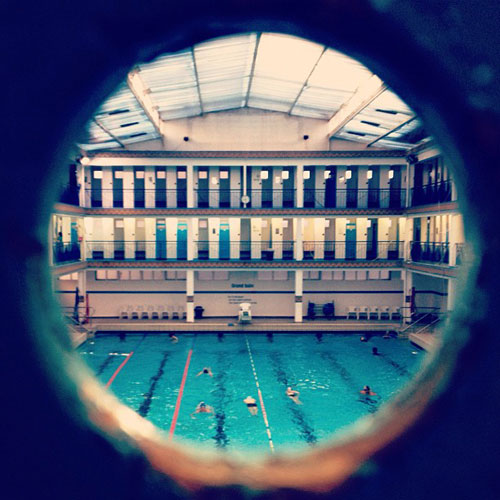
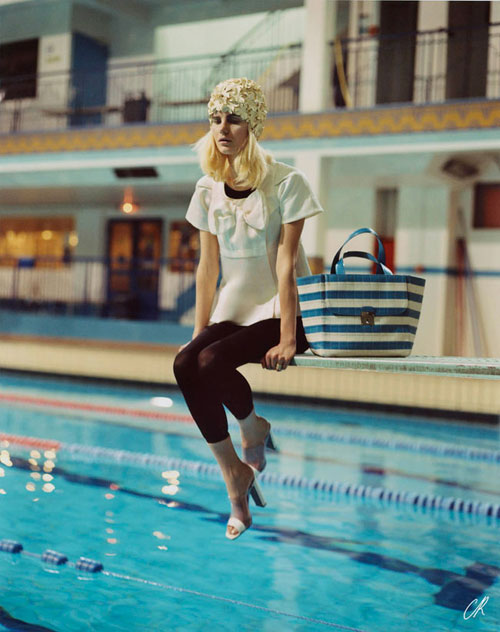
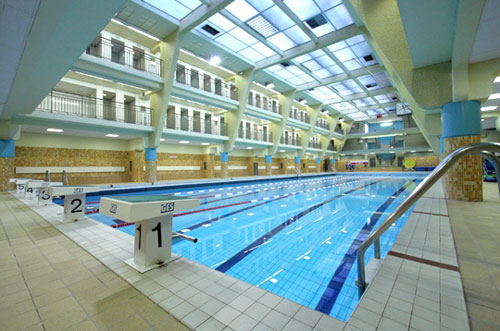
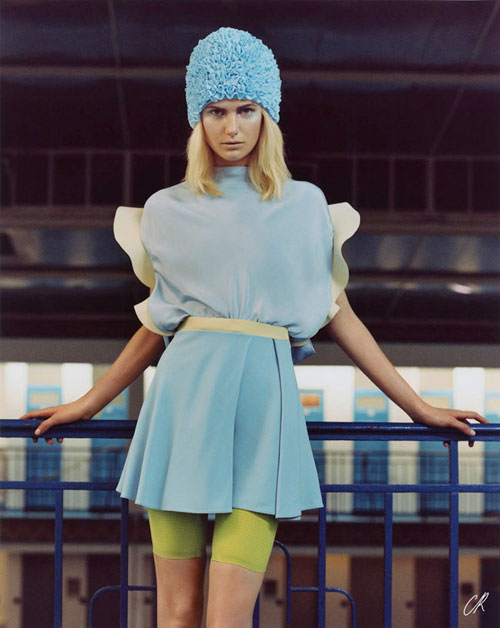
Piscine Pontoise is one of the best-loved pools in Paris and Carine Roitfeld counts herself among its admirers. Famous as a distinctive backdrop as well as a cozy retreat, the picturesque pool lends its ambiance to a memorable sporty-chic editorial for the second issue of CR Fashion Book,Dive Right In.” Carine describes the inspired setting: "The shoot was done at the Piscine Pontoise, which is one of the most exceptional swimming pools in Paris. I first found out about it from Hedi Slimane years ago. It's great because it is open late at night and they play classical music while you swim."

Located on rue de Pontoise in the Latin Quarter of Paris, the stunning Art Deco landmark was designed by Lucien Pollet and built in 1931. The wrought irons ribs and the opaque glass of the ceiling mesh in a dramatic canopy overhead and mosaics decorate the lobby, giving the pool its unique character. The pool itself is in the basin style and measures 33 meters by 15 meters, divided into six lanes. Surrounding the pool on two levels are 160 private changing rooms and the luxury is enhanced by a personal attendant to open the room for you. Note that in all public pools in Paris, proper swimming costumes are de rigueur: bathing caps or bonnets du bain for everyone and Speedo-style briefs for men. Be sure to bring towels and proper footwear.

Among the illustrious moments in the history of Piscine Pontoise: Juliette Binoche seeking tranquility in the hallowed waters in the film Blue by Krzysztof Kieslowski, Jacques Cousteau testing his first scuba suit before heading for deeper waters, Issey Miyake showing his men’s collection on a catwalk spanning the pool, and Johnny Weissmuller perfecting his trademark Tarzan yell against the Art Deco tiles. Take in a late night swim under the stars at Piscine Pontoise and perhaps the sexy woman winking at you from under her bathing cap in the next lane will be Carine Roitfeld…

Piscine Pontoise photos © Franck Bohbot and L’Internaute Magazine/Agathe Azzis and courtesy of crfashionbook.com, justacote.com, metrofrance.com, flickr.com.

samedi
nov.172012

Serge Lutens Fleurs D'Oranger

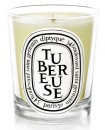
Do you want to smell like a Roitfeld? According to an interview with Do It In Paris, Carine Roitfeld favors two scents to enhance her seductive aura: Yves Saint Laurent Opium Body Moisturizer and Serge Lutens Fleurs d’Oranger. Formulated by Christopher Sheldrake in 1995, Fleurs d’Oranger is a complex fragrance, unobtrusive and delicate yet heady and decadent, beautiful but demanding, purely feminine, utterly irresistible. The notes center on white flowers with hints of citrus and spice: orange blossom, jasmine, tuberose, and white rose over a warm base of musk, hibiscus, cumin, cedarwood, nutmeg, and neroli. Serge Lutens himself describes Fleurs d’Oranger as the smell of happiness, that certainly sounds like the essence of Carine…

Carine Roitfeld photograph courtesy of Fashion Spot. Serge Lutens Fleurs d’Oranger image  © 2012 Serge Lutens.

vendredi
août312012

The Night Porter

“Maybe one day I'll become a film star. I'd love to become a film star... What do you think? A remake of The Night Porter with me instead of Charlotte Rampling?”

— Carine Roitfeld to Talk Magazine, April 2001

I came across the above quote recently and had to laugh. How very Carine — not for her the sophomoric Fifty Shades of Grey! If she were to do a film, she would naturally gravitate towards what is arguably the most controversial S&M narrative ever made.

The Night Porter, directed in 1974 by the Italian Liliana Cavani, stars Dirk Bogarde as Maxmilian Theo Aldorfer, a former Nazi SS officer, and Charlotte Rampling as Lucia Atherton, a survivor of his concentration camp. Flashbacks show Max tormenting Lucia, but also acting as her protector. The two are reunited 13 years after World War II, in a Vienna hotel where Max is now a night porter. There they fall back into their sadomasochistic relationship and all hell breaks loose.

It is a deeply disturbing film. The first time I sat down to watch it years ago, I couldn’t make it all the way through. But I decided to give it another try, taking a more detached view and trying to analyze what, aside from the obvious attraction of the taboo, would appeal to a woman as intelligent as Carine Roitfeld.

What struck me the most about The Night Porter this time around was the symbolic use of light and dark in the film. Max is both literally and figuratively a dark character. He has a slick, shadowy handsomeness, beneath which roils deep perversity. He works at night for a reason. He needs the cover of darkness for the sick ministrations he performs to the hotel guests — with needles, pills, or flesh. It turns out that the twisted things he does in the unlit rooms provide an outlet for the cruelty that he was able to give full reign to in his former life as an SS officer.

Enter Lucia, a conventional bourgeois housewife, dressed in blacks, greys, and slate blues, her hair tidily pinned up with nary a strand out of place. A flashback shows the contrast between her present-day appearance and her previous association with Max. We are shown Lucia as Max first saw her: one in a line of prisoners being checked into his camp, she stands nude, her bobbed hair bound by a ribbon, clothed only in white bobby socks and black Mary Janes. Max singles her out from all the other inmates and trains a camera on her, flooding her with light from its blub. The light makes her a brilliant, over-exposed white. This vision highlights the symbolism of her name: Lucia, a pun on “light” and St. Lucy, the patron saint of the blind.

Thus Max’s statement that he works at night because he has a sense of shame in the light has a double meaning. He feels shame for what he has done, but can’t overcome his compulsion to continually repeat the past — his hotels “guests” replacing his concentration camp victims. But he means it metaphorically as well in relation to Lucia, “the light one,” whom he deeply loves, albeit in a deeply twisted way.

Lucia’s association with light continues once she is reunited with Max. From that point on, she is never in dark clothing again. She initially struggles against him in a flowing, icy-white nightgown. Later she revels as a willing captive in his apartment dressed in a thick, cream-colored fisherman’s sweater over filmy white lingerie shorts. And her hair is never up again, but released... the flowing, tousled, sexy mess of the renegade. By the time Lucia states, “Max is more than just the past,” we have guessed this already from her transformation.

One cannot speak of the visuals of The Night Porter without addressing the iconic scene in which Lucia sings a Dietrich standard to the Nazi officers. It is a scene Carine herself might have styled: in a large, barren, white-tiled room, a number of SS officers lounge in bored disinterest while Lucia sings to them with clear relish and intent to titillate. She is nude from the waist up, wearing a few choice accessories. An officer’s cap is pulled low over her brooding eyes. Above-the-elbow black leather gloves encase her willowy arms. Striped suspenders create a graphic of two stark lines framing her bare breasts. Finally, there is a set of men’s black pinstriped trousers, the front of which she intermittently grinds and massages throughout the song. The perversity of the scene reaches its zenith when Max, who has been watching her with a crazed gleam in his eye, rewards her at the end of her performance with the severed head of a fellow prisoner who had been bullying the other inmates. Later he proudly recounts the scene to a friend, exclaiming, “It was biblical!”

It is worth pausing to consider the importance of Max’s allusion to the story of Salome. Is he, in aligning himself with the ancient biblical tale, trying to exonerate himself? He describes what should have been a derogatory episode for Lucia as one that was instead a triumph for her; like Salome, she wields great power.

It is this idea of a woman who is captive but not a victim that brings Carine Roitfeld to mind the most. Carine has defended her taste for showing bondage in her photos: “I don’t want to portray women as victims of male desire, to make them sex objects or first-degree objects of desire... when I’ve shown a woman tied up like one of Araki’s models, she’s always chic and doesn’t look as if she’s suffering — and this makes her stronger I think.” (Irreverent, 210) In the burlesque scene, Rampling’s Lucia is definitely chic and certainly not suffering. This aura is repeated later, when she is bound in chains in Max’s apartment. There is nothing weak about her when she rebuffs her would-be rescuers with a calm but steely, “I’m here of my own free will.”

The role of dark and light is perhaps most poignant in the closing scene of the movie. Max and Lucia attempt an escape from the neo-Nazi cell that has surrounded Max’s apartment, determined to separate them. Holding hands they run, dressed in the costumes of the past they could not and would not let go: he in his SS uniform, and she in her white little-girl’s dress and knee socks. But their pursuers execute them, midway across a bridge, at dawn. The lighting of these final moments is amazing. I don’t think it’s any accident how literally the director illustrates the darkness being chased away by the light.

Twisted and sensational though it is, there’s no denying how artful The Night Porter is in dealing with themes of sexual transgression... Like so many photos styled by Carine Roitfeld.

The Night Porter stills © 2012 Criterion. Carine Roitfeld photo © 2011 V Magazine, LLC. S&M modification by Kellina de Boer.